
This revelation is not surprising to those of us who were not suckered in by Ron Reagan’s bravado and pandering to race and anti-government sentiments.
He was a racist. He was a liar. He had more tough macho verbiage in his arsenal than intellectual capacity in his brain. It’s sad how easily American have, are and will continue to be attracted to tough-man personas and discount the importance of intelligence and experience.
(New York Times 3/18/23)
Nearly 43 years later, a prominent Texas politician said he unwittingly took part in a Middle East tour with a clandestine agenda.
By Peter Baker
March 18, 2023 Updated 5:22 p.m. ET 10 MIN READ
WASHINGTON — It has been more than four decades, but Ben Barnes said he remembers it vividly. His longtime political mentor invited him on a mission to the Middle East. What Mr. Barnes said he did not realize until later was the real purpose of the mission: to sabotage the re-election campaign of the president of the United States.
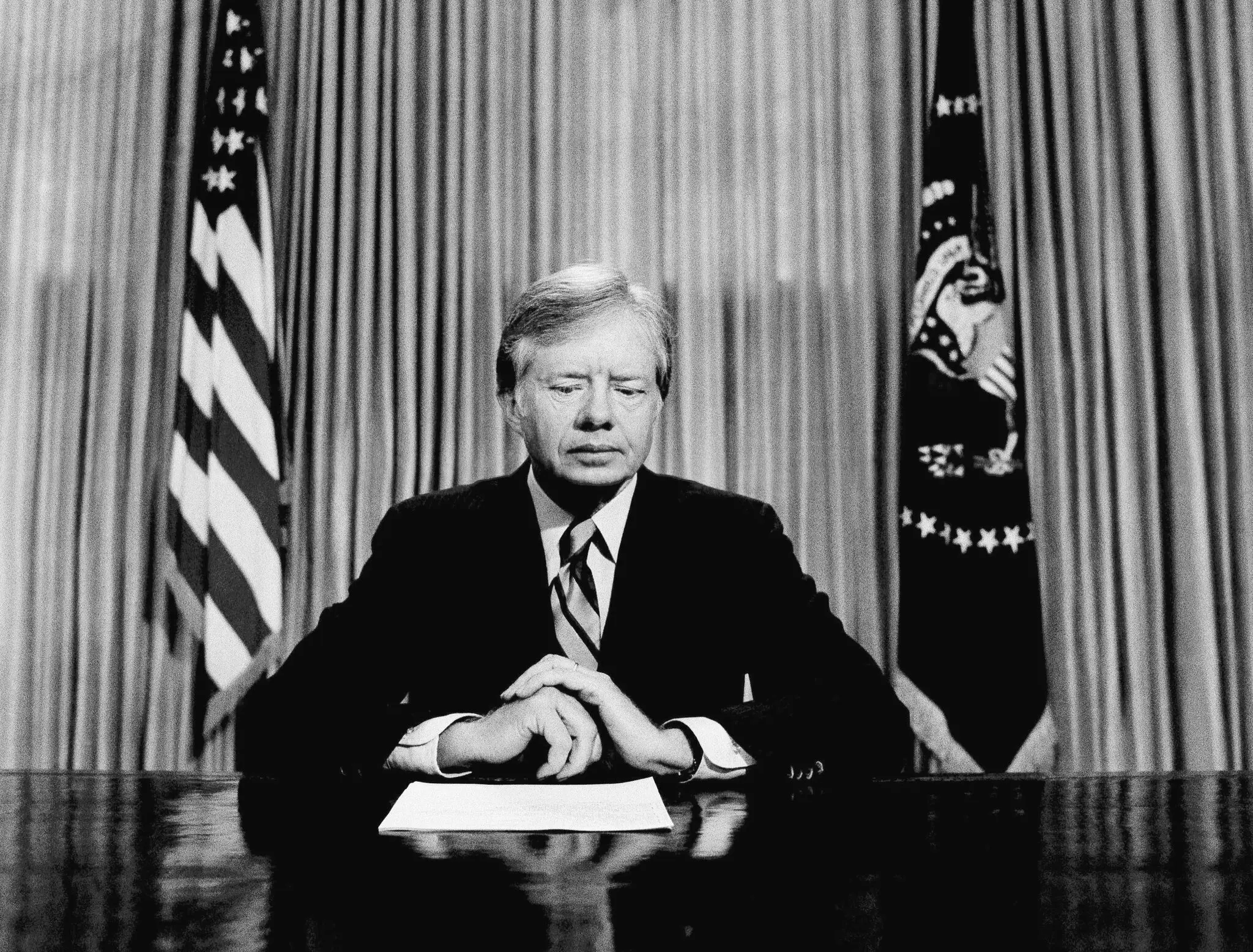
It was 1980 and Jimmy Carter was in the White House, bedeviled by a hostage crisis in Iran that had paralyzed his presidency and hampered his effort to win a second term. Mr. Carter’s best chance for victory was to free the 52 Americans held captive before Election Day. That was something that Mr. Barnes said his mentor was determined to prevent.
His mentor was John B. Connally Jr., a titan of American politics and former Texas governor who had served three presidents and just lost his own bid for the White House. A former Democrat, Mr. Connally had sought the Republican nomination in 1980 only to be swamped by former Gov. Ronald Reagan of California. Now Mr. Connally resolved to help Mr. Reagan beat Mr. Carter and in the process, Mr. Barnes said, make his own case for becoming secretary of state or defense in a new administration.
The hostage crisis in Iran hampered Mr. Carter’s effort to win a second term. Associated Press
What happened next Mr. Barnes has largely kept secret for nearly 43 years. Mr. Connally, he said, took him to one Middle Eastern capital after another that summer, meeting with a host of regional leaders to deliver a blunt message to be passed to Iran: Don’t release the hostages before the election. Mr. Reagan will win and give you a better deal.
Then shortly after returning home, Mr. Barnes said, Mr. Connally reported to William J. Casey, the chairman of Mr. Reagan’s campaign and later director of the Central Intelligence Agency, briefing him about the trip in an airport lounge.
Mr. Carter’s camp has long suspected that Mr. Casey or someone else in Mr. Reagan’s orbit sought to secretly torpedo efforts to liberate the hostages before the election, and books have been written on what came to be called the October surprise. But congressional investigations debunked previous theories of what happened.
William J. Casey, left, went on to become the director of the Central Intelligence Agency during the Reagan administration. Getty Images
Mr. Connally did not figure in those investigations. His involvement, as described by Mr. Barnes, adds a new understanding to what may have happened in that hard-fought, pivotal election year. With Mr. Carter now 98 and in hospice care, Mr. Barnes said he felt compelled to come forward to correct the record.
“History needs to know that this happened,” Mr. Barnes, who turns 85 next month, said in one of several interviews, his first with a news organization about the episode. “I think it’s so significant and I guess knowing that the end is near for President Carter put it on my mind more and more and more. I just feel like we’ve got to get it down some way.”
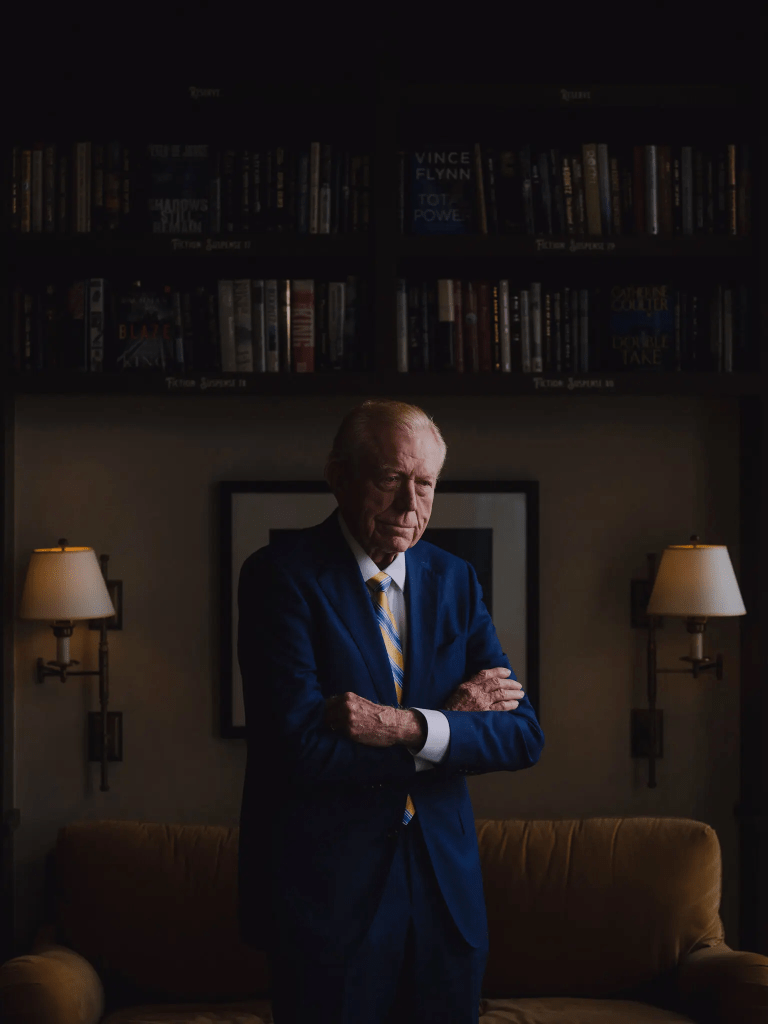
“History needs to know that this happened,” Ben Barnes now says of his trip to the Middle East in 1980.
Mr. Barnes is no shady foreign arms dealer with questionable credibility, like some of the characters who fueled previous iterations of the October surprise theory. He was once one of the most prominent figures in Texas, the youngest speaker of the Texas House of Representatives and later lieutenant governor. He was such an influential figure that he helped a young George W. Bush get into the Texas Air National Guard rather than be exposed to the draft and sent to Vietnam. Lyndon B. Johnson predicted that Mr. Barnes would become president someday.
Confirming Mr. Barnes’s account is problematic after so much time. Mr. Connally, Mr. Casey and other central figures have long since died and Mr. Barnes has no diaries or memos to corroborate his account. But he has no obvious reason to make up the story and indeed expressed trepidation at going public because of the reaction of fellow Democrats.
Mr. Barnes, right, with President Lyndon B. Johnson. Records at the Lyndon Baines Johnson Library and Museum in Austin confirm part of Mr. Barnes’s story. viaLyndonB.JohnsonPresidentialLibrary
Mr. Barnes identified four living people he said he had confided in over the years: Mark K. Updegrove, president of the L.B.J. Foundation; Tom Johnson, a former aide to Lyndon Johnson (no relation) who later became publisher of the Los Angeles Times and president of CNN; Larry Temple, a former aide to Mr. Connally and Lyndon Johnson; and H.W. Brands, a University of Texas historian.
All four of them confirmed in recent days that Mr. Barnes shared the story with them years ago. “As far as I know, Ben never has lied to me,” Tom Johnson said, a sentiment the others echoed. Mr. Brands included three paragraphs about Mr. Barnes’s recollections in a 2015 biography of Mr. Reagan, but the account generated little public notice at the time.
Records at the Lyndon Baines Johnson Library and Museum confirm part of Mr. Barnes’s story. An itinerary found this past week in Mr. Connally’s files indicated that he did, in fact, leave Houston on July 18, 1980, for a trip that would take him to Jordan, Syria, Lebanon, Saudi Arabia, Egypt and Israel before returning to Houston on Aug. 11. Mr. Barnes was listed as accompanying him.
Brief news accounts at the time reported on some of Mr. Connally’s stops with scant detail, describing the trip as “strictly private.” An intriguing note in Mr. Connally’s file confirms Mr. Barnes’s memory that there was contact with the Reagan camp early in the trip. Under the heading “Governor Reagan,” a note from an assistant reported to Mr. Connally on July 21: “Nancy Reagan called — they are at Ranch he wants to talk to you about being in on strategy meetings.” There was no record of his response.
Mr. Barnes recalled joining Mr. Connally in early September to sit down with Mr. Casey to report on their trip during a three-hour meeting in the American Airlines lounge at what was then called the Dallas/Fort Worth Regional Airport. An entry in Mr. Connally’s calendar found this past week showed that he traveled to Dallas on Sept. 10. A search of Mr. Casey’s archives at the Hoover Institution at Stanford University turned up no documents indicating whether he was in Dallas then or not.
Mr. Barnes said he was certain the point of Mr. Connally’s trip was to get a message to the Iranians to hold the hostages until after the election. “I’ll go to my grave believing that it was the purpose of the trip,” he said. “It wasn’t freelancing because Casey was so interested in hearing as soon as we got back to the United States.” Mr. Casey, he added, wanted to know whether “they were going to hold the hostages.”
None of that establishes whether Mr. Reagan knew about the trip, nor could Mr. Barnes say that Mr. Casey directed Mr. Connally to take the journey. Likewise, he does not know if the message transmitted to multiple Middle Eastern leaders got to the Iranians, much less whether it influenced their decision making. But Iran did hold the hostages until after the election, which
Mr. Reagan won, and did not release them until minutes after noon on Jan. 20, 1981, when Mr. Carter left office.
Iran released the American hostages minutes after Mr. Carter left office at noon on Jan. 20, 1981. Associated Press
John B. Connally III, the former governor’s eldest son, said in an interview on Friday that he remembered his father taking the Middle East trip but never heard about any message to Iran. While he did not join the trip, the younger Mr. Connally said he accompanied his father to a meeting with Mr. Reagan to discuss it without Mr. Barnes and the conversation centered on the Arab-Israeli conflict and other issues the next president would confront.
“No mention was made in any meeting I was in about any message being sent to the Iranians,” said Mr. Connally. “It doesn’t sound like my dad.” He added: “I can’t challenge Ben’s memory about it, but it’s not consistent with my memory of the trip.”
Suspicions about the Reagan camp’s interactions with Iran circulated quietly for years until Gary Sick, a former national security aide to Mr. Carter, published a guest essay in The New York Times in April 1991 advancing the theory, followed by a book, “October Surprise,” published that November.
The term “October surprise” was originally used by the Reagan camp to describe its fears that Mr. Carter would manipulate the hostage crisis to effect a release just before the election.
To forestall such a scenario, Mr. Casey was alleged to have met with representatives of Iran in July and August 1980 in Madrid leading to a deal supposedly finalized in Paris in October in which a future Reagan administration would ship arms to Tehran through Israel in exchange for the hostages being held until after the election.
Mr. Reagan welcomed Bruce Laingen, a former hostage in Iran, to the White House in January 1981. Mr. Laingen and 51 other Americans had been held for 444 days in Tehran. Associated Press
The House and Senate separately authorized investigations and both ultimately rejected the claims. The bipartisan House task force, led by a Democrat, Representative Lee H. Hamilton of Indiana, and controlled by Democrats 8 to 5, concluded in a consensus 968-page report that Mr. Casey was not in Madrid at the time and that stories of covert dealings were not backed by credible testimony, documents or intelligence reports.
Reached by telephone this past week, Mr. Sick said he never heard of any involvement by Mr. Connally but saw Mr. Barnes’s account as verifying the broad concerns he had raised. “This is really very interesting and it really does add significantly to the base level of information on this,” Mr. Sick said. “Just the fact that he was doing it and debriefed Casey when he got back means a lot.” The story goes “further than anything that I’ve seen thus far,” he added. “So this is really new.”
Michael F. Zeldin, a Democratic lawyer for the task force, and David H. Laufman, a Republican lawyer for the task force, both said in recent interviews that Mr. Connally never crossed their radar screen during the inquiry and so they had no basis to judge Mr. Barnes’s account.
While Mr. Casey was never proved to have been engaged in any October surprise deal-making, he was later accused of surreptitiously obtaining a Carter campaign briefing book before the lone debate between the two candidates, although he denied involvement.
Mr. Carter meeting with Gary Sick, a national security aide, in the Oval Office. Mr. Sick advanced a theory after Mr. Carter’s loss that a Reagan ally had brokered a deal with Iran for the hostages’ post-election release in exchange for arms. Associated Press
News of Mr. Barnes’s account came as validation to some of Mr. Carter’s remaining advisers. Gerald Rafshoon, who was his White House communications director, said any interference may have changed history. “If we had gotten the hostages home, we’d have won, I really believe that,” he said. “It’s pretty damn outrageous.”
Mr. Connally was a political giant of his era. Raised on a South Texas cotton farm, he served in the Navy in World War II and became a confidant of Lyndon B. Johnson, helping run five of his campaigns, including his disputed 1948 election to the Senate that was marred by credible allegations of fraud. Mr. Connally managed Mr. Johnson’s unsuccessful bid for the Democratic presidential nomination in 1960, then worked for the ticket of John F. Kennedy and Mr. Johnson. Mr. Connally was rewarded with an appointment as secretary of the Navy. He then won a race for governor of Texas in 1962.
He was in the presidential limousine sitting just in front of Mr. Kennedy in Dallas in November 1963 when Lee Harvey Oswald opened fire. Mr. Connally suffered injuries to his back, chest, wrist and thigh, but unlike Mr. Kennedy survived the ordeal. He won two more terms as governor, then became President Richard M. Nixon’s secretary of the Treasury and ultimately switched parties. He was a favorite of Mr. Nixon, who wanted to make him his vice president or successor as president.
Mr. Connally was indicted on charges of perjury and conspiracy to obstruct justice in 1974, accused by prosecutors of taking $10,000 to support a milk price increase, but acquitted by a jury.
Along the way, Mr. Connally found a political protégé in Mr. Barnes, who became “more a godson than a friend,” as James Reston Jr. put it in “The Lone Star,” his biography of Mr. Connally. The son of a peanut farmer who paid for college selling vacuum cleaners door to door, Mr. Barnes was elected to the Texas Legislature at age 21 and stood at Mr. Connally’s side for his first speech as a candidate for governor in 1962.
Mr. Barnes said he and John B. Connally Jr. met with leaders across the Middle East — though not Iran — to thwart the release of the hostages until after the presidential election. Associated Press
With Mr. Connally’s help, Mr. Barnes became House speaker at 26 and was later elected lieutenant governor, a powerful position in Texas, only to fall short in his own bid for governor in 1972. He urged Mr. Connally to run for president in 1980 even though by then they were in different parties.
After Mr. Connally’s campaign collapsed, he and Mr. Barnes went into business together, forming Barnes/Connally Investments. The two built apartment complexes, shopping centers and office buildings, and bought a commuter airline and an oil company, and later a barbecue house, a Western art magazine, a title company and an advertising company. But they overextended themselves, took on too much debt and, after falling oil prices shattered the Texas real estate market, filed for bankruptcy in 1987.
The two stayed on good terms. “In spite of the disillusionment of our business arrangements, Ben Barnes and I remain friends, although I doubt that either of us would go back into business with the other,” Mr. Connally wrote in his memoir, “In History’s Shadow,” shortly before dying in 1993 at age 76. Mr. Barnes, for his part, said this past week that “I remain a great fan of him.”
Mr. Barnes said he had no idea of the purpose of the Middle East trip when Mr. Connally invited him. They traveled to the region on a Gulfstream jet owned by Superior Oil. Only when they sat down with the first Arab leader did Mr. Barnes learn what Mr. Connally was up to, he said.
Mr. Connally said, “‘Look, Ronald Reagan’s going to be elected president and you need to get the word to Iran that they’re going to make a better deal with Reagan than they are Carter,’” Mr. Barnes recalled. “He said, ‘It would be very smart for you to pass the word to the Iranians to wait until after this general election is over.’ And boy, I tell you, I’m sitting there and I heard it and so now it dawns on me, I realize why we’re there.”
Mr. Barnes said that, except for Israel, Mr. Connally repeated the same message at every stop in the region to leaders such as President Anwar el-Sadat of Egypt. He thought his friend’s motive was clear. “It became very clear to me that Connally was running for secretary of state or secretary of defense,” Mr. Barnes said. (Mr. Connally was later offered energy secretary but declined.)
From left, Mr. Barnes, Mr. Connally and President Anwar el-Sadat of Egypt. Mr. Barnes said Mr. Connally promoted Mr. Reagan to every leader they met on their trip. via Ben Barnes
Mr. Barnes said he did not reveal the real story at the time to avoid blowback from his own party. “I don’t want to look like Benedict Arnold to the Democratic Party by participating in this,” he recalled explaining to a friend. The headlines at the time, he imagined, would have been scandalous. “I did not want that to be on my obituary at all.”
But as the years have passed, he said, he has often thought an injustice had been done to Mr. Carter. Discussing the trip now, he indicated, was his way of making amends. “I just want history to reflect that Carter got a little bit of a bad deal about the hostages,” he said. “He didn’t have a fighting chance with those hostages still in the embassy in Iran.”
Peter Baker is the chief White House correspondent and has covered the last five presidents for The Times and The Washington Post. He is the author of seven books, most recently “The Divider: Trump in the White House, 2017-2021,” with Susan Glasser. @peterbakernyt • Facebook
A version of this article appears in print on , Section A, Page 1 of the New York edition with the headline: 43-Year Secret of Sabotage: Mission to Subvert Carter Is Revealed

